
Understanding the Anatomy of Boxing Shoes: From Boxing Shoes Men’s & Women’s Guide (2026)
The Biomechanical Foundation: Why Your Boxing Shoes Hurt Your Feet
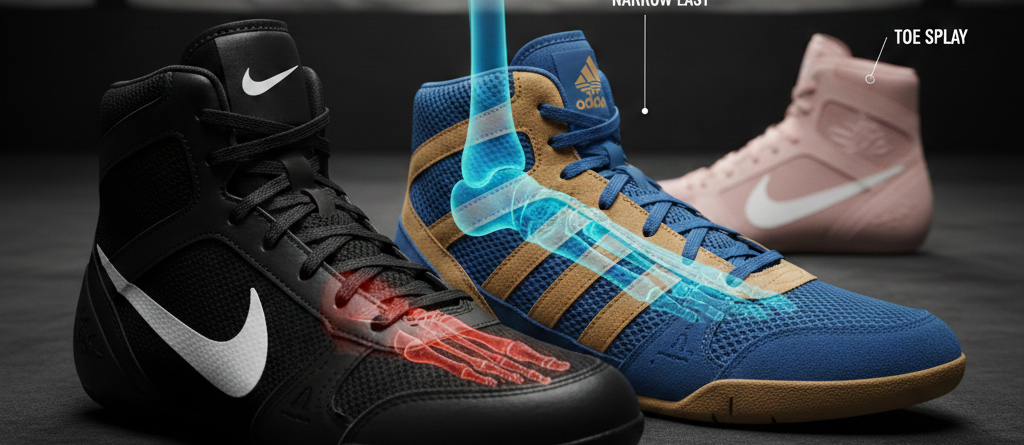
The primary reason athletes experience foot pain in combat sports is a mismatch between the foot’s natural anatomy and the shoe’s engineered “last.” Most modern boxing shoes men and women wear are built on traditionally narrow European lasts, compressing the metatarsals and restricting toe splay, which leads to cramping, plantar fasciitis, and compromised kinetic chain energy transfer during punches.
If you have ever stepped out of the ring with screaming arches or crushed pinky toes, you are experiencing a biomechanical failure, not a lack of conditioning. As combat footwear engineers and podiatric biomechanics specialists, we see this constantly in 2026. The industry standard has heavily prioritized a sleek, aerodynamic look over functional anatomy. While baseline models like the Adidas Box Hog 4 and Nike HyperKO 2 provide incredible grip, their traditionally narrow European-style lasts often leave fighters dealing with lateral foot compression.
Think of the “last” as the chassis of the shoe. If you put a heavy-duty truck engine into a narrow sports car chassis, the framework will eventually buckle under the torque. The same applies to your foot. When throwing a power cross, your rear foot must dig in, pivot, and drive force upward. If the toe box restricts splay, you lose your structural base. This instability forces the plantar fascia to overwork, attempting to stabilize the foot, leading directly to the common complaint: why boxing shoes hurt my feet.
The Solo Fauz Authority Box
At Solo Fauz, our engineering philosophy bridges the gap between old-school combat grit and modern podiatric science. We believe that whether you wear a men’s size 14 or a women’s size 6, your footwear should be an anatomical extension of your body, not a restrictive cage. Through extensive APMA-aligned research, we design and analyze combat footwear that respects the biomechanical realities of the human foot, mitigating injury while maximizing rotational power.
Boxing Shoes vs. Standard Trainers: The Physics of the Pivot
Athletes often find that standard athletic trainers fail in the ring because they are built for forward, linear momentum rather than the explosive, multidirectional rotational torque required in combat sports. True boxing footwear lacks plush, elevated cushioning to keep the foot close to the canvas, optimizing lateral containment and preventing catastrophic ankle rolls during high-speed pivots.
To understand why a running shoe or a standard gym trainer is detrimental—and downright dangerous—in the ring, you have to look at the physics of combat movement. A standard running shoe features a thick EVA foam midsole and a heel-to-toe drop designed to absorb shock from linear strikes against the pavement. When you attempt to throw a lead hook in a running shoe, that plush foam compresses unevenly. Instead of transferring kinetic energy from the floor through your hips, the foam absorbs your power, effectively dampening your punch.
Worse is the lack of lateral containment. Boxing demands violent stops, sudden lateral shifts, and intense rotational torque on the balls of the feet. Trainers feature high centers of gravity and breathable, flexible mesh that lacks reinforced sidewalls. When you pivot hard, your foot can literally slide off the footbed of a running shoe, resulting in severe ankle sprains.
By contrast, elite boxing shoes are engineered like track spikes combined with wrestling boots. They drop your center of gravity drastically. The uppers are woven with high-tensile synthetic threads or reinforced leather overlays that lock the foot onto the footbed. This “lockdown” means that when you generate rotational torque, the shoe moves with your foot as a single, unified structure. There is zero lag between your brain telling your foot to pivot and the shoe executing that movement against the canvas.
The Engineering Moat: Deep Anatomy of 2026 Combat Footwear
The structural integrity of professional boxing shoes relies on four critical components: the anatomical last, the toe box splay capacity, the midsole energy transfer system, and the outsole pivot control. Together, these elements dictate how effectively a fighter can generate ground reaction forces, maintain balance, and execute kinetic chains without sustaining repetitive stress injuries.
The Last: The Chassis of the Shoe
As mentioned earlier, the last is the 3D mechanical form around which a shoe is constructed. Historically, boxing lasts were modeled after ballet shoes—ultra-narrow, flat, and designed purely to minimize weight. However, by 2026, biomechanical research supported by the APMA (American Podiatric Medical Association) has revolutionized this. The modern baseline, seen in iterations of the Nike Machomai 2 and Everlast Elite lines, utilizes a slightly more contoured last that cups the heel securely while allowing a straighter medial line. A proper last prevents the heel from slipping during explosive forward steps while accommodating the natural arch, reducing the strain on the Achilles tendon during prolonged bouts on the toes.
Toe Box Splay: The Foundation of Power
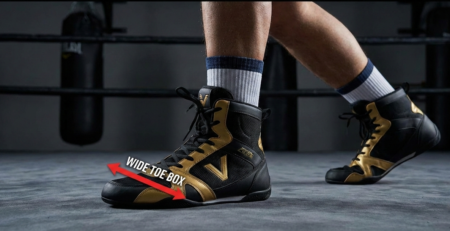
Your toes are your body’s natural stabilizers. In combat sports, when you load weight onto the lead foot or pivot on the rear foot, your toes need to spread—or “splay”—to increase surface area and grip. Traditional boots compress the toes into a point, mimicking a dress shoe. This not only causes severe blistering but also actively reduces your punching power by minimizing your base. Advanced 2026 designs are finally beginning to incorporate an asymmetrical toe box. This wider forefoot profile allows the big toe to remain straight, anchoring the foot, while the remaining toes splay naturally to absorb and redirect rotational forces.
Midsole Energy Transfer: Eliminating the Lag
The midsole in combat footwear is a game of millimeters. Too thick, and you lose proprioception (the tactile feedback from the canvas). Too thin, and you risk metatarsal bruising during heavy bag sessions. Modern engineering utilizes ultra-dense, low-profile EVA or proprietary injected polymers. This material does not absorb energy; it acts as a conduit. When you drop your weight into a punch, the midsole resists compression, immediately transferring your kinetic energy back up through your legs. Furthermore, many elite shoes now embed a subtle TPU (Thermoplastic Polyurethane) shank in the midfoot. This shank acts like a springboard, providing torsional rigidity so the shoe snaps back into shape after a heavy pivot.
Outsole Pivot Control: Friction on Demand
The outsole is where the rubber meets the canvas. The 2026 standard moves away from entirely flat, monolithic rubber slabs. Instead, engineers use zoned traction patterns. At the ball of the foot (the pivot point), you will find concentric circles or smooth, multi-directional herringbone patterns that allow for frictionless spinning. Conversely, the heel and lateral edges feature aggressive, biting treads that act like brakes when you need to arrest your momentum instantly. The rubber compounds are specifically formulated to interact with canvas and ring matting, balancing “slip” for pivoting with “stick” for planting.
Biomechanical Engineering: Boxing Shoes Men vs. Women
Women’s boxing shoes require distinct biomechanical engineering compared to men’s models, primarily due to the “Q-angle” of the hips and a generally higher arch structure. Footwear that fails to account for a woman’s narrower heel and altered kinetic chain mechanics can lead to knee strain, lateral instability, and reduced power generation in the ring.
For decades, the combat sports industry simply employed a “shrink and pink” strategy—taking men’s boxing shoes, making them smaller, and labeling them for women. In 2026, podiatric science dictates a much more rigorous approach. The most critical difference lies in the anatomical Q-angle (the angle formed between the quadriceps muscle and the patellar tendon). Because women generally have wider hips relative to their knees, the angle at which their leg meets the foot is steeper. This steeper angle places distinct rotational demands on the ankle and the medial side of the foot during a punch.
To compensate for this, true women’s boxing boots must feature a more secure, tapered heel cup. If a woman wears a down-sized men’s shoe, her heel will inevitably slip, causing friction, blisters, and a loss of plantar power. Furthermore, female athletes frequently present with higher medial arches and greater forefoot flexibility. The midfoot shank in a woman’s boxing shoe needs to offer enhanced structural support to prevent the arch from collapsing under the stress of the Q-angle mechanics, while the forefoot must allow for slightly more flexion to accommodate natural biomechanics.
The Ultimate Guide for Wide and Flat Feet
Fighters with wide or flat feet must prioritize boxing shoes that feature an expanded E or EE width profile and a robust medial support shank to prevent overpronation. Attempting to squeeze a wide foot into standard narrow lasts restricts blood flow, causes nerve impingement, and compromises balance, making proper footwear selection vital for performance and injury prevention.
If you are typing “boxing shoes wide feet” or “boxing shoes extra wide” into a search engine, you already know the agony of a standard D-width combat boot. When an athlete with wide feet or fallen arches (flat feet) wears a standard narrow shoe like the traditional Cleto Reyes or standard Nike HyperKO, the foot spills over the sides of the sole. This “spillover” means your foot is resting on the soft upper material rather than the solid rubber base, destroying lateral stability.
Flat feet introduce another layer of complexity: overpronation. When a flat-footed fighter throws a heavy cross, the rear foot tends to roll aggressively inward (medially). Without a rigid midfoot shank and a slightly wider base to catch this inward roll, the ankle collapses inward, sending damaging shockwaves up the shin and into the knee. Over time, this repetitive micro-trauma results in shin splints and patellar tendonitis.
For athletes in the size 12-14 range, the leverage forces are exponentially higher. A size 14 fighter generating heavyweight power needs a significantly wider platform to stabilize that mass. Brands that simply lengthen the shoe without proportionally widening the last create a “ski effect,” making the fighter clumsy and slow.
If you suffer from wide or flat feet, look for brands offering designated wide models or naturally wider anatomical shapes, often found in certain Adidas or Superare SE lines. You need a shoe with a flat, wide outsole to maximize ground contact and a reinforced upper that won’t stretch out and tear after two months of hard sparring. For a deep dive into specifically curated models that accommodate larger widths without sacrificing agility, explore our comprehensive breakdown:
Brand Comparison: The 2026 Footwear Landscape
When comparing modern boxing brands, Nike offers aggressive lockdown and ultra-lightweight speed but utilizes famously narrow lasts, while Adidas provides a more balanced, slightly wider profile suited for traditional boxers. Heritage brands like Everlast and boutique lines like Superare SE focus heavily on comprehensive ankle support, durability, and accommodating varied foot anatomies.
The combat footwear market in 2026 is highly specialized. Nike remains the dominant force for speed-oriented fighters. Models like the Machomai 2 and the HyperKO 2 are engineering marvels regarding weight reduction and traction. They use flywire technologies and exoskeleton cages to lock the foot down. However, they are notoriously narrow. If you do not have a standard or narrow foot, these shoes will likely cause the exact foot pain discussed in Section 1.
Adidas, particularly with the Box Hog 4 and the Speedex lines, has opted for a slightly more forgiving fit. They utilize breathable mesh uppers combined with suede overlays that conform better to the foot over time. The Box Hog series acts as an excellent baseline for the industry—durable, grippy, and suitable for a wider variety of foot shapes, though they lack the extreme structural rigidity of the HyperKO.
Then we have Everlast and Superare SE. Everlast, in recent years, has partnered with Michelin for outsole rubber, completely revamping its grip mechanics. Their Elite high-tops provide some of the best ankle support on the market, acting almost like a brace. Superare SE brings a boutique, fighter-first approach, often building shoes with slightly wider toe boxes and premium materials that bridge the gap between old-school aesthetics and new-school biomechanics. High-end traditionalists also look to Venum, Winning, and Grant. While Winning and Grant are legendary for their gloves, their footwear often sticks to highly traditional, leather-heavy designs that require long break-in periods.
For a highly granular, point-by-point engineering comparison between the industry’s two biggest sellers, read our full analysis here: Boxing Shoes Nike Hyperko VS Nike Machamai.
2026 Elite Combat Footwear Comparison Table
Selecting the right boot requires aligning your fight style and anatomical width profile with the proper engineering. The table below evaluates the top 2026 models based on their optimal use case, width compatibility, and our biomechanical expert scoring system.
| Model | Best For | Width Profile | Expert Score (Out of 10) |
| Nike HyperKO 2 | Explosive speed, strict lateral lockdown | Narrow (D) | 8.9 |
| Adidas Box Hog 4 | All-around training, breathable mobility | Standard to Slightly Wide (D-E) | 8.5 |
| Superare SE Boot | Anatomical toe splay, premium comfort | Wide Accommodating (E) | 9.1 |
| Everlast Elite (Michelin) | Maximum ankle support, heavy pivots | Standard (D) | 8.7 |
| Venum Elite Evo | Aggressive forward pressure, durability | Standard (D) | 8.3 |
(Note: Sizing standards vary globally. Always consult a [Sizing Chart: US vs UK vs EU for Boxing Boots] before purchasing to ensure proper kinetic fit. For our complete, continuously updated rankings of this year’s top footwear, visit: Best Boxing Shoes 2026.
The Gear Ecosystem: Shoes as the Kinetic Foundation
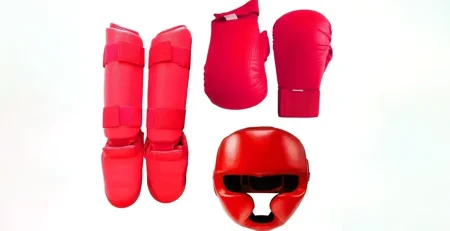
Boxing shoes are not an isolated piece of gear; they are the foundational anchor of the entire kinetic chain. A fighter’s power does not originate in the shoulders or the gloves; it begins with ground reaction force generated by the feet, transferred through the shoes, stabilized by the legs, and delivered through the hands.
When analyzing the complete gear ecosystem, many beginners spend hundreds of dollars on premium Winning or Cleto Reyes gloves to protect their hands, while neglecting their footwear. This is a critical error in biomechanical logic. If your shoes lack the proper outsole traction to grip the canvas, or if the midsole fails to support your arch, your hip rotation will be delayed and your balance compromised. A compromised stance means the energy transfer from the floor to your fist is dissipated. You essentially leak power before the punch even lands.
Furthermore, poor footwear alignment affects your defensive capabilities. Slip-and-counter mechanics rely on microscopic shifts in weight distribution. If your boxing shoes, men’s or women’s models, are too bulky or improperly fitted, your reaction time slows. The evolution of boxing gear shows a clear trajectory: as the science of the sport advances, the integration between the athlete’s body and their equipment becomes seamless. To explore how footwear has evolved alongside human biomechanics to reach this current state of precision engineering, check out our historical deep dive: The History of Shoes: A Journey Through Time.
8-Part FAQ: Biomechanics & Sizing Addressed
1. Why do my boxing shoes hurt my feet during training?
Pain typically stems from a narrow “last” compressing your metatarsals, restricting toe splay, and lacking arch support. This biomechanical mismatch forces the plantar fascia to overcompensate, leading to cramping, blistering, and reduced power transfer.
2. Can I use wrestling shoes for boxing?
Yes, wrestling shoes are functionally similar, offering flat soles, low centers of gravity, and high ankle support. However, they are designed more for mat grip than the specific multi-directional pivot friction required on a standard boxing canvas.
3. What is the difference between the boxing shoes men and women?
Women’s models are engineered to account for the Q-angle of the hips, featuring narrower, tapered heel cups to prevent slippage and specialized midfoot shanks to support generally higher arches and distinct kinetic chain mechanics.
4. How tight should boxing boots fit?
They should fit like a second skin without cutting off circulation. You want zero heel slippage and firm lateral containment, but your toes must still have enough room to splay slightly to maintain a wide, stable base.
5. What are the best boxing shoes for extra–wide feet?
Fighters with wide feet should look for E or EE width profiles. Certain Adidas models and Superare SE lines naturally accommodate wider anatomies much better than traditionally narrow Nike or Cleto Reyes boots.
6. Do size 12-14 boxing shoes perform differently?
Yes, larger sizes face exponential leverage forces. Size 12-14 shoes require proportionally widened lasts and stiffer midfoot shanks to stabilize heavier athletes, preventing the clumsy “ski effect” caused by poorly scaled designs.
7. Are high-top or low-top boxing shoes better?
High-tops offer superior proprioceptive feedback and mechanical bracing against severe ankle rolls, ideal for traditional boxers. Low-tops provide maximum ankle mobility and lighter weight, favored by fast, outside-moving fighters.
8. How do UK, US, and EU boxing shoe sizes compare?
Sizing varies strictly by brand. Generally, a US Men’s 10 equates to a UK 9 and an EU 44. Always cross-reference the specific manufacturer’s centimeter (CM) measurements to guarantee an accurate anatomical fit.
The Solo Fauz Verdict: Ground Reaction Meets Engineering
From a podiatric biomechanics perspective, the combat footwear you choose dictates the efficiency of your kinetic chain. If you restrict toe splay and ignore midfoot shank rigidity, you are actively sacrificing rotational torque, compromising lateral stability, and inviting repetitive stress injuries. The 2026 baseline demands that athletes stop accepting foot pain as a normal part of training. Whether you require a wide-toe box for heavy planting or a specialized women’s last to accommodate Q-angle mechanics, your shoes must function as a seamless extension of your anatomy. Protect your foundation, and your power will follow.
Would you like me to help you match your specific foot measurements and fighting style to a customized combat footwear recommendation?
Join the Elite Combat Community
Stay ahead of the curve with the latest in combat footwear engineering, biomechanical drills, and exclusive gear drops.
Follow Solo Fauz for real-time ring science:
- Facebook | Join 15k+ fighters in our technical gear community.
- Instagram | High-res anatomy breakdowns and pro-fighter features.
- TikTok | 60-second pivot physics and “Wide Feet” shoe hacks.
- Pinterest | Visual infographics on boxing biomechanics and sizing charts.
Engineer’s Note: Have a specific foot injury or gear question? Tag us in your training footage using #SoloFauzAuthority for a biomechanical assessment of your stance.

Leave a Reply